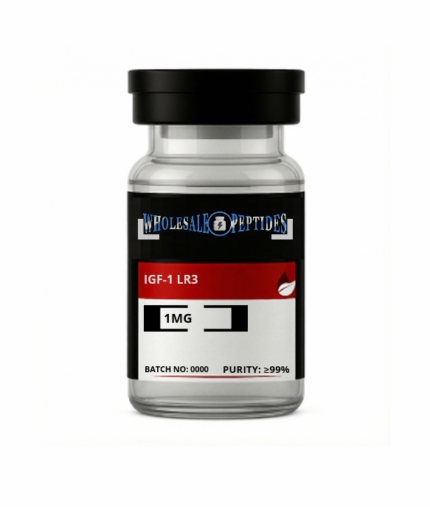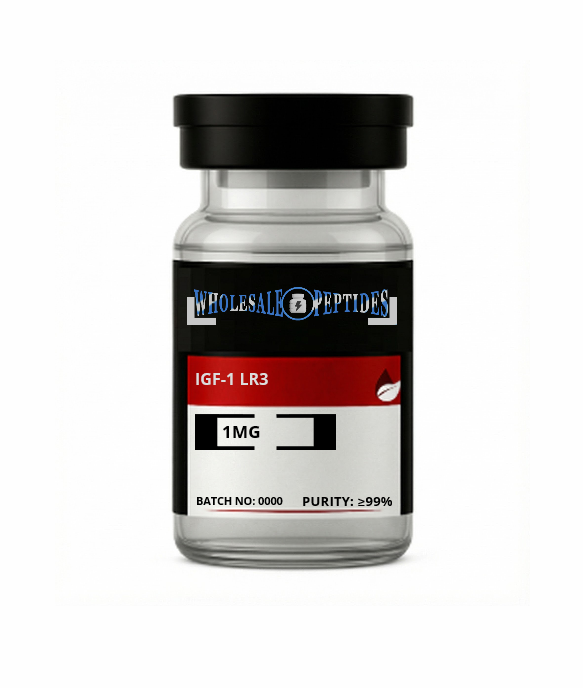
IGF-1 LR3 1mg Overview
IGF-1 LR3 1mg (Insulin-like Growth Factor-1 Long Arg3) functions as a synthetic, recombinant analogue of endogenous IGF-1. Specifically, scientists engineered this 83-amino acid polypeptide for advanced research. The "LR3" modification involves substituting Arginine for Glutamic Acid at position 3 and adding a 13-amino acid extension at the N-terminus. Notably, this precise structural change results in a compound with significantly higher biological potency than standard IGF-1.
We supply this product as a 1mg lyophilized (freeze-dried) powder. Consequently, IGF-1 LR3 1mg serves as a primary tool for investigating cellular growth signaling and protein synthesis. Its unique structure effectively prevents binding to IGF-binding proteins (IGFBPs). Therefore, this allows for increased bioavailability and a prolonged half-life within experimental models.
Mechanism of Action: IGF-1 Receptor Agonism
IGF-1 LR3 acts as a highly potent agonist of the IGF-1 Receptor (IGF-1R). Within controlled research settings, its primary mechanisms include:
- IGFBP Evasion: First, researchers study how the LR3 modification bypasses inhibitory binding proteins. This leads to the sustained activation of the IGF-1R.
- PI3K/Akt Pathway Activation: Additionally, scientists investigate the downstream signaling that triggers cellular proliferation and inhibits apoptosis.
- Enhanced Myogenesis: Furthermore, laboratories analyze the differentiation and proliferation of myoblasts, or muscle precursor cells.
- Nutrient Transport: Finally, researchers explore the insulin-mimetic effects of IGF-1 LR3 regarding glucose and amino acid uptake.
Primary Research Applications & Studied Effects
Researchers frequently utilize our IGF-1 LR3 1mg preparation in preclinical studies focusing on various physiological outcomes:
- Protein Synthesis & Muscle Repair Research
Researchers widely study IGF-1 LR3 for its role in accelerating muscle protein synthesis. Specifically, they investigate its ability to promote the regeneration of damaged muscle fibers. Consequently, this helps researchers model recovery from intense physical strain or simulated injury. - Metabolic Health & Fat Oxidation
In research models, researchers explore this peptide for its ability to regulate fat storage. Furthermore, they analyze how it promotes the utilization of fatty acids for energy production. This research contributes to a deeper understanding of lean mass preservation. - Connective Tissue & Bone Remodeling
By stimulating collagen synthesis, IGF-1 LR3 allows scientists to research the repair of tendons and ligaments. Additionally, it serves as a subject of interest in bone remodeling studies, particularly regarding age-related bone density loss.
IGF-1 LR3 1mg Research Applications Summary
In controlled environments, researchers utilize IGF-1 LR3 for:
- Cell Signaling Mapping: Specifically focusing on the Akt/mTOR signaling axis.
- Growth Factor Kinetics: Probing the specific binding affinity of the IGF-1R.
- Comparative Modeling: Benchmarking LR3 against standard IGF-1 or IGF-1 DES.
Choose our high-purity IGF-1 LR3 1mg to ensure consistent and reliable results in your growth factor research. Explore our selection today.