Product Overview
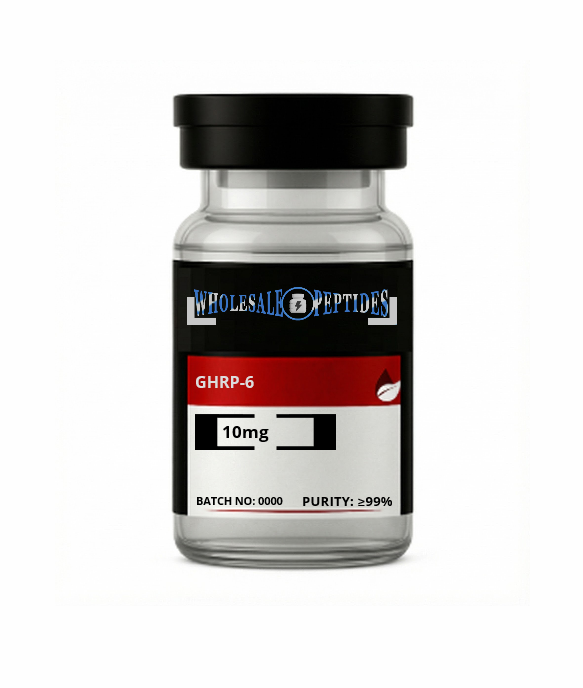
GHRP-6 10mg is a potent synthetic growth hormone secretagogue peptide. Researchers frequently study this compound in controlled laboratory environments. Specifically, it allows for the investigation of endocrine signaling pathways. This peptide belongs to the growth hormone releasing peptide (GHRP) family. Consequently, it is a primary tool for exploring receptor-mediated hormone systems.
We supply this preparation as 10 mg of high-purity lyophilized peptide. Moreover, the sealed research vial ensures maximum product integrity. The lyophilization process effectively preserves peptide stability during transport. Therefore, researchers can easily reconstitute the compound for precise in vitro experimentation. Because we maintain rigorous standards, this peptide provides reliable data for every study.
Key Features and Quality Control
We manufacture our GHRP-6 10mg to meet the highest analytical standards. This ensures laboratory-grade results for every study.
- High Purity: We adhere to rigorous standards to ensure product quality.
- Batch Consistency: Our quality control processes guarantee batch-to-batch consistency.
- Optimal Stability: The lyophilized form ensures maximum stability under correct storage conditions.
Scientific Research Applications
In controlled lab environments, scientists utilize GHRP-6 for various experimental models. For example, research applications include:
- Endocrine signaling pathway research.
- Receptor activation and interaction analysis.
- Comparative secretagogue peptide evaluation.
- Hormone signaling network modeling.
- Cell signaling pathway research.
- Controlled in vitro peptide signaling studies.
Researched Benefits and Mechanisms
In clinical models, GHRP-6 demonstrates several vital physiological impacts. Notable areas of investigation include:
- GHS-R1a Agonism: It acts as a selective agonist for investigating calcium-mediated signaling.
- Hunger Modulation: This peptide facilitates the analysis of hypothalamic hunger and satiety circuits. Specifically, it acts as a ghrelin-mimetic in various models.
- Somatotroph Secretion: Furthermore, it supports research on phospholipase C activation. This leads to pulsatile somatotroph secretion studies.
- Lipid Metabolism: Finally, it enables the evaluation of metabolic homeostasis in cellular models.