
Product Overview
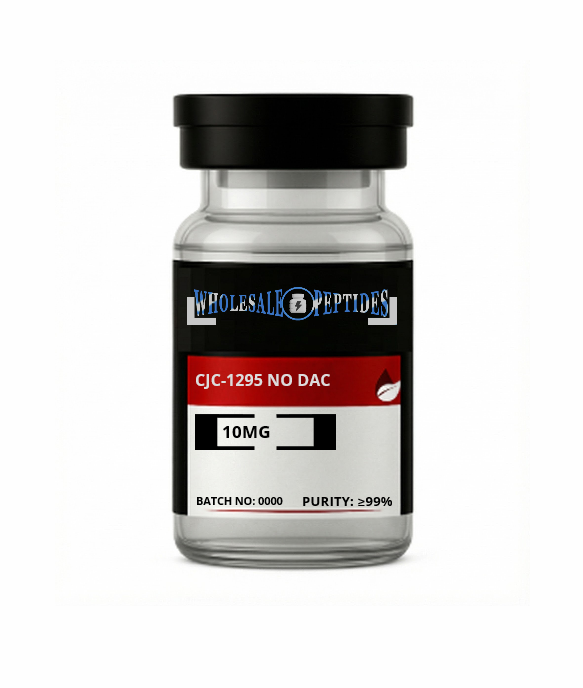
CJC-1295 No DAC 10mg, also known as MOD GRF (1-29), is a synthetic peptide for endocrine research. Scientists use this compound to investigate peptide-receptor interaction pathways. Specifically, it represents a modified analog of Growth Hormone Releasing Hormone (GHRH). Consequently, it serves as a primary tool for exploring hormone signaling.
We supply 10mg of high-purity lyophilized peptide in a sealed research vial. Notably, the lyophilization process preserves peptide stability during transport. This allows researchers to reconstitute the compound easily for controlled in vitro experimentation. Because it has a stable analytical profile, CJC-1295 No DAC remains a widely referenced molecule in biochemical studies.
Product Features and Technical Specifications
We manufacture our CJC-1295 No DAC to meet the highest industry standards. This ensures laboratory-grade results for every study.
- Name: CJC-1295 (No DAC) / MOD GRF (1-29)
- Content: 10mg per vial
- Purity: ≥99% (HPLC Verified)
- Form: White to off-white lyophilized powder
- CAS Number: 863288-34-0
- Molecular Formula: $C_{152}H_{252}N_{44}O_{42}$
- Molecular Weight: Approximately 3367.9 g/mol
Compound Overview
Chemically, CJC-1295 (No DAC) acts as a modified GHRH analog. The peptide interacts with GHRH receptors in experimental laboratory models. Scientists frequently study its role in receptor-mediated signaling cascades. Moreover, its defined structure helps researchers examine intracellular regulatory networks. Therefore, this compound is essential for investigating endocrine regulatory dynamics and hormone regulation.
Primary Research Applications
In controlled laboratory settings, scientists utilize CJC-1295 No DAC for various experimental models. Specifically, research applications include:
- Endocrine Signaling: Investigating hormonal pathway mechanisms.
- Receptor Interaction: Studying how peptides bind to GHRH receptors.
- Regulatory Studies: Analyzing hormonal regulatory mechanisms.
- Cellular Analysis: Performing complex cell signaling analysis.
- Molecular Research: Investigating molecular endocrine pathways.
- Comparative Modeling: Modeling comparative peptide interactions.
- In Vitro Studies: Executing controlled peptide signaling experiments.
Reviews
There are no reviews yet.