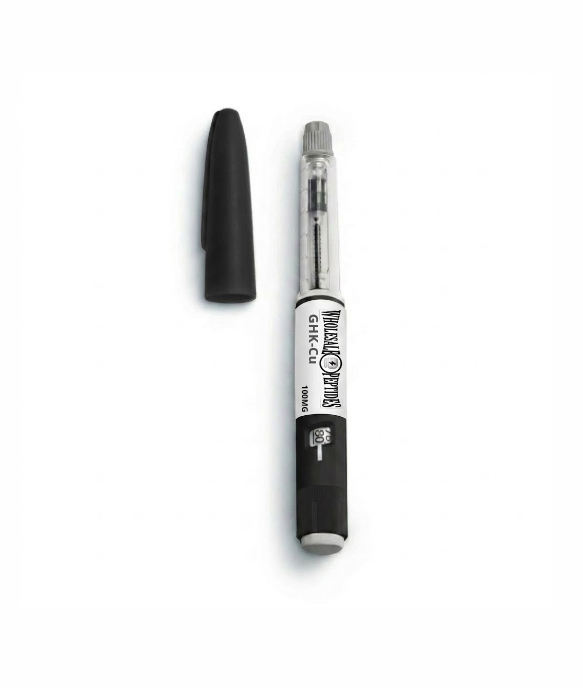
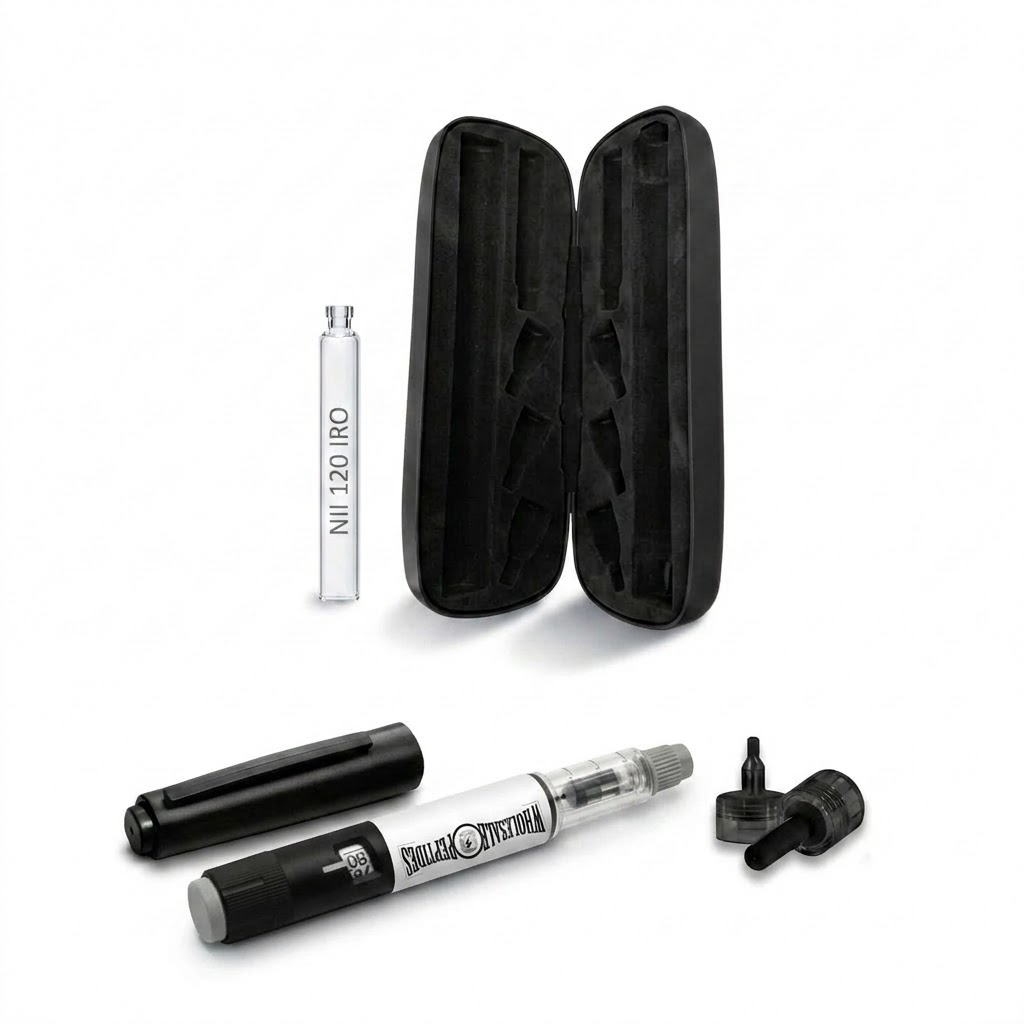
GHK-Cu 100mg Pen Overview
Our GHK-Cu 100mg Premixed Pen features a high-purity copper(II) complex of the tripeptide Glycyl-L-Histidyl-L-Lysine. Known widely as Copper Tripeptide-1, this compound serves as a fundamental tool in controlled in vitro studies. Researchers primarily focus on extracellular matrix (ECM) signaling and collagen synthesis pathways when using this molecule. Furthermore, its unique chemical structure allows for detailed cell-surface interaction analysis.
We provide this peptide in a convenient, high-stability format designed for diverse laboratory protocols. Consequently, scientists can maintain consistent results across long-term experimental timelines.
Key Features of GHK-Cu 100mg Pen
Our GHK-Cu pen offers several distinct advantages for the modern laboratory:
- Premium Purity: Each batch undergoes stringent quality control to ensure consistent research results.
- Optimal Unit Size: The 100mg dose is ideal for a wide range of in vitro investigations.
- Enhanced Stability: We supply the peptide in a lyophilized format to prevent degradation during shipping. Consequently, the compound maintains its integrity during storage.
- Distinct Physical Properties: The pen contains a solution characterized by a vibrant blue color, which is a hallmark of high-quality copper-peptide complexes.
Understanding GHK-Cu (Copper Tripeptide)
GHK-Cu forms when the tripeptide GHK (Gly-His-Lys) chelates with a copper(II) ion. This unique coordination chemistry makes it an essential tool for probing matrix-associated readouts. Notably, it helps researchers investigate how peptides influence the structural integrity of the ECM.
Additionally, scientists use GHK-Cu to analyze receptor-adjacent signaling. Specifically, they study how the complex interacts with cell-surface receptors in various model systems. Therefore, the peptide remains a staple in biochemistry and molecular biology research.
Research Applications
Scientists primarily utilize GHK-Cu to observe several biological pathways. Specifically, research focus areas include:
- In-Vitro Collagen Pathways: Modeling the upregulation of collagen and elastin within cellular cultures.
- Tissue Remodeling Research: Investigating the signaling mechanisms behind cellular repair and regeneration.
- Anti-Aging Research Models: Studying how the peptide influences specific skin-cell markers in a laboratory setting.
- Peptide-Metal Interactions: Analyzing the chemical bonding and stability of metal-tripeptide complexes.