Product Overview
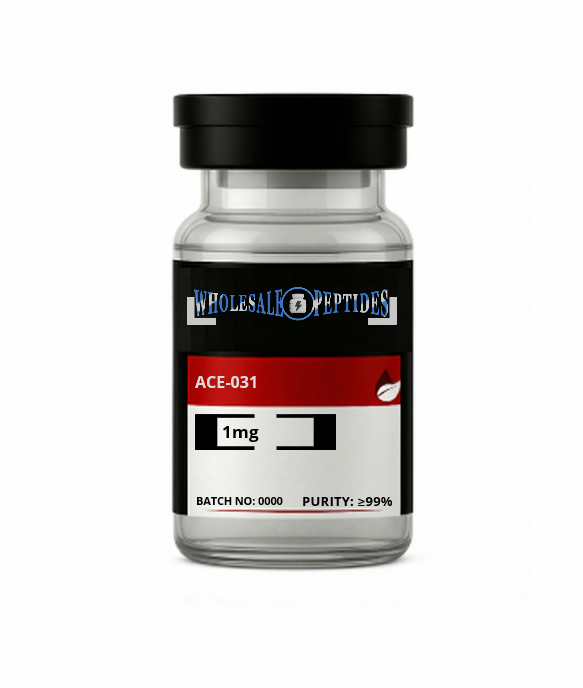
Researchers utilize the ACE-031 1mg peptide vial to investigate myostatin inhibition and muscle regeneration. Specifically, this compound remains a preferred choice in advanced research settings. The precise dosing enabled by our glass vials ensures accurate measurement. This accuracy remains critical for achieving reliable outcomes in muscle health investigation.
Furthermore, the lyophilized form of the ACE-031 peptide significantly enhances stability. Notably, it extends shelf life while preserving the peptide’s integrity and potency. Therefore, scientists can obtain consistent results in both laboratory and clinical applications. Because it maintains a stable analytical profile, ACE-031 remains a widely referenced molecule in muscle regulatory studies.
Scientific Research Applications
We manufacture our ACE-031 1mg to meet the highest industry standards. This ensures laboratory-grade results for every study.
- Quantity: 1 mg of high-purity lyophilized compound.
- Format: Supplied in a sealed, sterile research vial.
- Stability: Optimized for long-term potency and structural integrity.
- Application: Specifically designed for myostatin inhibition and signaling research.
Key Research Applications
In controlled laboratory environments, scientists utilize ACE-031 to explore signaling pathways. Specifically, research applications include:
- Myostatin Pathway Investigation: Analyzing the natural limits of muscle growth.
- Receptor-Ligand Analysis: Studying how fusion proteins interact with biological receptors.
- Molecular Growth Regulation: Investigating how to enhance lean body mass.
- Sarcopenia Research: Modeling potential treatments for age-related muscle loss.
- Intracellular Signaling: Mapping the network of muscle regulation.
Mechanism of Action: Blocking Myostatin
Specifically, ACE-031 acts as a soluble fusion protein designed to inhibit myostatin. Myostatin is a natural regulator that limits skeletal muscle growth. By blocking this regulator, ACE-031 promotes increased muscle development and strength. Consequently, it serves as a therapeutic candidate for muscle-wasting conditions. These include Duchenne Muscular Dystrophy, ALS, and age-related sarcopenia.
Clinical studies demonstrate that ACE-031 binds to myostatin and related proteins. This action prevents them from interacting with their receptors. As a result, the compound allows for enhanced lean body mass and faster muscle recovery in experimental models.